
Define the liquidity requirement
Before configuring the appchain, you must determine whether the system requires general-purpose trading liquidity or specialized collateral liquidity. This distinction dictates the tokenomics, the settlement layer design, and the counterparty risk profile.
General-purpose trading liquidity focuses on high-frequency asset swaps and market-making depth. It is designed for speculative trading or consumer-facing applications where rapid entry and exit are paramount. However, for institutional settlement, this type of liquidity often introduces volatility and slippage risks that are unacceptable for core financial operations.
Specialized collateral liquidity, by contrast, prioritizes stability and velocity over speculative volume. The goal here is not to facilitate high-volume trading, but to ensure that pledged assets can be instantly verified, locked, or liquidated during settlement windows. As noted by the DTCC, institutional appchains are engineered to enable "trillions in daily trading" through efficient collateral management rather than open-market speculation. This approach leverages tokenized digital assets to enhance transparency and automation without exposing the settlement layer to the volatility of public blockchains.
Your initial specification should explicitly state whether the appchain serves as a dedicated collateral management network or a general trading venue. If the primary use case is institutional settlement, focus on assets with low volatility and high trust scores, such as tokenized treasuries or major fiat equivalents. This decision will shape the subsequent technical implementation, including the choice of consensus mechanism and the integration of oracle feeds for real-time asset valuation.
Compare liquidity provision models
Institutional settlement requires predictable depth and low slippage. You choose a liquidity model based on whether you prioritize capital efficiency, regulatory compliance, or execution speed. The three primary approaches—native token bonding, external liquidity pools, and centralized exchange integration—offer distinct trade-offs for appchain infrastructure.
Native Token Bonding
Native bonding ties liquidity directly to the appchain’s security model. Validators or stakers lock tokens to secure the chain, which inherently creates a base layer of liquidity. This model aligns incentives between security and market depth, reducing the need for external market makers. However, it limits liquidity to the token’s circulating supply and can suffer from low depth during market stress. It is best suited for early-stage appchains prioritizing decentralization over high-frequency trading.
External Liquidity Pools
External pools, often built on decentralized exchanges (DEXs), allow developers to source liquidity from broader DeFi ecosystems. This approach offers superior capital efficiency and access to deep order books across multiple chains. The trade-off is increased complexity and exposure to smart contract risk. Institutional users must manage impermanent loss and ensure the pool’s depth can handle large settlement volumes without significant price impact.
Centralized Exchange Integration
Centralized exchanges (CEXs) provide the highest liquidity depth and fastest execution speeds, making them the standard for institutional settlement. Integrating with a CEX allows for traditional order book mechanics and regulatory compliance frameworks. The downside is centralization risk and reliance on third-party infrastructure. This model is ideal for mature appchains where settlement volume and regulatory certainty are the primary concerns.
| Model | Liquidity Depth | Operational Friction | Institutional Readiness |
|---|---|---|---|
| Native Bonding | Low-Medium | Low | Early Stage |
| External Pools | Medium-High | High | Growing |
| CEX Integration | High | Medium | Standard |
Integrate cross-chain settlement
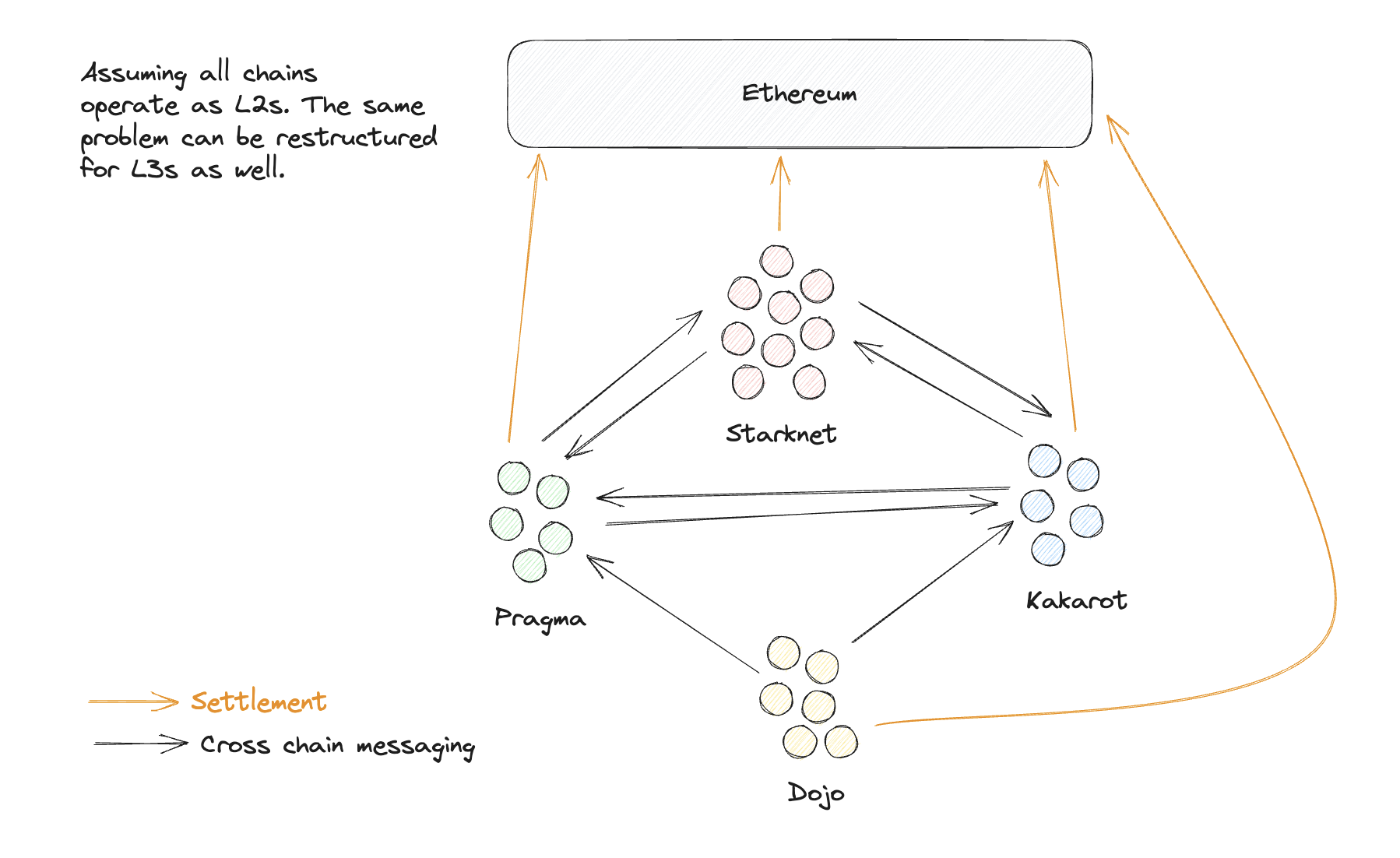
Connecting your appchain to existing liquidity sources requires a structured approach to interoperability. The goal is to enable omnichain payments and settlement without compromising the security or speed of your application-specific blockchain. This process involves selecting the right protocol, configuring the bridge, and validating the flow of assets.
Begin by choosing a cross-chain messaging or bridging protocol that supports your appchain’s architecture. Popular options include LayerZero, Wormhole, or Chainlink CCIP, depending on whether you prioritize speed, security, or cost. Review the official documentation for each protocol to ensure compatibility with your chain’s finality requirements.
Deploy and configure the necessary bridge contracts on both the source and destination chains. This step involves setting up relayers or validators that will verify and relay messages between chains. Ensure that the contract addresses are correctly mapped and that the gas limits are sufficient for complex settlement transactions.
Before enabling mainnet liquidity, run extensive tests on a testnet or with minimal value on mainnet. Verify that assets are transferred correctly, that settlement times meet your SLA, and that no unexpected fees or delays occur. This phase is critical for identifying potential bottlenecks or security vulnerabilities.
Once live, continuously monitor cross-chain transaction volumes, success rates, and latency. Use analytics dashboards provided by your interoperability protocol to track performance. Adjust liquidity pool sizes or routing strategies as needed to maintain efficient settlement and minimize slippage for institutional users.
Manage collateral and risk
Institutional settlement requires rigorous oversight of liquidity health and counterparty exposure. Unlike retail trading, where slippage is a nuisance, institutional flows demand predictable settlement finality. You must monitor collateral quality in real time to prevent margin calls or failed trades during peak volatility.
Monitor liquidity health
Track tokenized collateral utilization rates and available headroom across your appchain nodes. Rely on official data feeds rather than aggregated third-party estimates. The DTCC’s Collateral AppChain, for example, leverages the Chainlink Runtime Environment to enable near real-time visibility into collateral status across financial markets and blockchains [[src-serp-1]]. This transparency allows risk managers to detect liquidity drains before they impact settlement.
Set up automated alerts for utilization thresholds. When collateral ratios approach critical levels, the system should trigger pre-emptive actions, such as requesting additional margin or rebalancing positions. This proactive stance prevents the cascading failures that plague less monitored systems.
Manage counterparty risk
Counterparty risk in appchains stems from smart contract vulnerabilities and node operator reliability. Conduct regular audits of the underlying infrastructure. Ensure that your appchain nodes are connected to reputable data providers and that oracle feeds are diversified to prevent single-point failures.
Diversify your collateral assets. Relying on a single token or asset class exposes your settlement layer to idiosyncratic shocks. By spreading exposure across multiple tokenized assets, you mitigate the impact of any single asset’s price volatility. This diversification is a core principle of modern collateral management, as highlighted by industry leaders like DTCC [[src-serp-3]].
Pre-launch liquidity risk assessment checklist
Before going live, validate your risk controls with this checklist:
-
Verify real-time data feed reliability from Chainlink or equivalent providers.
-
Test automated margin call triggers under simulated stress scenarios.
-
Confirm smart contract audit reports are current and address all critical findings.
-
Ensure collateral diversification strategies are coded and tested.
-
Validate node operator SLAs and backup procedures.
By embedding these checks into your workflow, you ensure that your appchain’s liquidity remains robust and your settlement processes remain secure.
Address common integration: what to check next
Institutional settlement requires precision in both collateral management and liquidity sourcing. The following questions address the core technical and operational aspects of securing appchain liquidity.
No comments yet. Be the first to share your thoughts!