
The Liquidity Constraint for Appchains
Appchains solve the fragmentation problem by giving each application its own dedicated blockchain, but this architectural choice creates a new bottleneck: liquidity isolation. Unlike shared Layer 1 networks where capital flows freely between thousands of applications, an appchain starts with a thin pool of assets. Without deliberate aggregation strategies, this isolation can stifle trading volume and increase slippage, making the chain less attractive to users and liquidity providers.
The core challenge lies in bridging this gap between a specialized, high-throughput chain and the broader decentralized finance (DeFi) ecosystem. Liquidity providers are risk-averse; they prefer deep, established pools on major networks like Ethereum or Solana where they can access the widest range of assets. Moving capital to a new appchain requires trust in the bridge security and confidence that the appchain will maintain sufficient depth to handle transactions without excessive cost.
To overcome this, developers must treat liquidity not as a byproduct but as a primary design constraint. This involves integrating omnichain payment rails and automated market makers that can pull in liquidity from external chains. For example, platforms like Thirdweb’s AppChain provide infrastructure for developers to access multi-chain liquidity, allowing dApps to settle transactions across different networks without forcing users to manually bridge assets. Similarly, institutional efforts like the DTCC’s Collateral AppChain leverage shared infrastructure to manage collateral in near real-time across financial markets, demonstrating how specialized chains can tap into existing financial liquidity pools.
The tradeoff is clear. While appchains offer superior performance and customizability, they require active liquidity engineering to remain competitive. Without these aggregation layers, an appchain risks becoming a quiet, high-speed lane with no traffic.
Appchain liquidity choices that change the plan
Building an appchain for liquidity aggregation means choosing where to place risk and cost. You are trading the deep, fragmented pools of public blockchains for the controlled, high-velocity settlement of a dedicated chain. This section breaks down the concrete factors you must evaluate before committing to this architecture.
Settlement speed vs. capital efficiency
Appchains offer near-instant finality, which is critical for high-frequency trading and collateral management. DTCC’s Collateral AppChain, for example, leverages the Chainlink Runtime Environment (CRE) to enable near real-time settlement across financial markets1. However, this speed comes at the cost of capital efficiency. Public chains like Ethereum or Solana aggregate liquidity from thousands of protocols, creating deep order books. An appchain starts with a cold start problem; you must bootstrap liquidity or rely on expensive bridge mechanisms to move assets from public networks.
Security assumptions and trust minimization
Public chains rely on decentralized validator sets and economic security models (staking). Appchains typically use a smaller set of validators, often run by the enterprise or a consortium. This reduces the attack surface for 51% attacks but introduces centralization risks. You must evaluate whether your use case can tolerate the trust assumptions of a permissioned or semi-permissioned validator set. For institutional collateral management, this tradeoff is often acceptable because the primary risk is operational, not network consensus.
Interoperability and bridge risks
Liquidity aggregation requires assets to move seamlessly between the appchain and external markets. Each bridge or cross-chain message passing protocol introduces a potential point of failure. The more external chains you connect to, the larger your attack surface becomes. Public chains solve this by having native liquidity; appchains must build or buy these connections. Evaluate the complexity of your cross-chain messaging layer and the associated smart contract risks.
Cost structure and predictability
Public chains suffer from volatile gas fees during network congestion. Appchains allow you to set fixed or predictable transaction costs, which is essential for institutional budgeting. However, you bear the infrastructure cost of running nodes and maintaining the chain. For high-volume, low-margin transactions, the predictability of an appchain often outweighs the variable costs of public networks.
| Factor | Appchain | Public Chain |
|---|---|---|
| Settlement Speed | Near-instant (finalized) | Variable (block time dependent) |
| Liquidity Depth | Bootstrapped (cold start) | Deep (aggregated pools) |
| Security Model | Consortium/Permissioned | Decentralized/Staking |
| Transaction Cost | Predictable/Fixed | Volatile/Gas-based |
| Interoperability | Bridge-dependent (higher risk) | Native/Standardized |
How to evaluate appchain liquidity aggregation
Appchains are moving liquidity from isolated silos into shared, purpose-built networks. This shift changes how capital moves across chains, but it also introduces new complexity for developers and institutions. The goal is not just connectivity, but efficient settlement with lower friction.
Use this framework to assess whether an appchain solution actually improves liquidity aggregation or just adds another layer of abstraction.
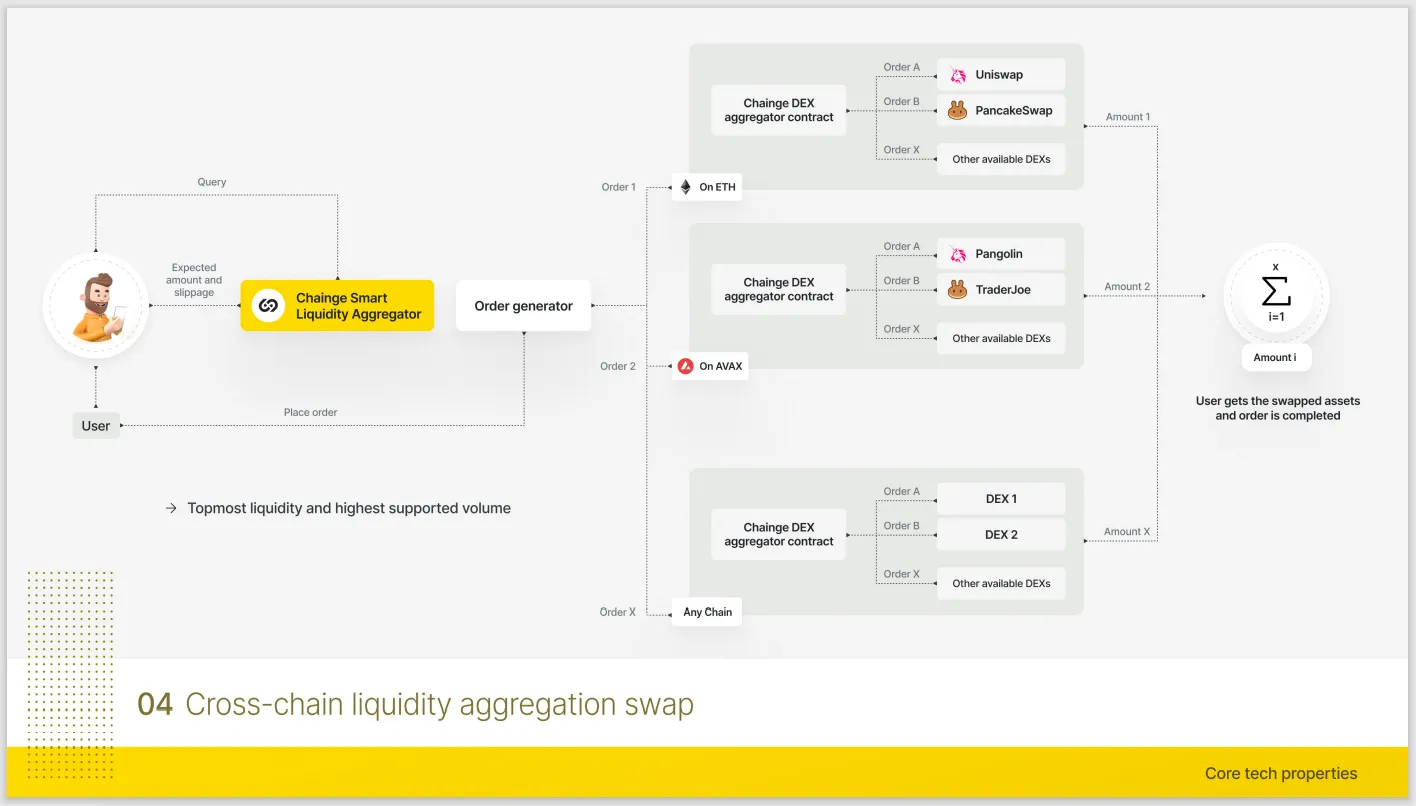
Evaluate the time it takes for a transaction to settle across the appchain and its connected networks. Traditional bridges often suffer from delays and high fees. Appchains should offer near-instant finality for aggregated liquidity. Check if the protocol uses native interoperability layers or relies on third-party bridges, which introduce latency and security risks.

Liquidity aggregation is only useful if there is enough capital to fill large orders without significant slippage. Look for protocols that pool liquidity from multiple sources rather than keeping it fragmented. Deep liquidity pools reduce the impact of large trades. Ensure the appchain can access deep order books or automated market maker pools across different chains.

Many cross-chain solutions rely on multi-signature wallets or federated validators, which centralize control. Appchains should minimize trust assumptions. Prefer solutions that use zero-knowledge proofs or decentralized validator sets to verify cross-chain messages. Review the security audits of the underlying infrastructure. A breach in one chain should not compromise the entire aggregated liquidity pool.

The best liquidity model is useless if developers cannot easily access it. Look for standardized APIs and SDKs that simplify cross-chain interactions. The integration should feel as simple as calling a local function. Avoid protocols that require custom code for every new chain. Good appchain solutions abstract the complexity of cross-chain messaging into a single, clean interface.
Avoid the weak options
Use this section to make the How Appchains Are Redefining Liquidity Aggregation decision easier to compare in real life, not just on paper. Start with the reader's actual constraint, then separate must-have requirements from details that are merely nice to have. A practical choice should survive normal use, maintenance, timing, and budget. If a recommendation only works in an ideal situation, call that out plainly and give the reader a fallback path.
The simplest way to use this section is to write down the must-have criteria first, then compare each option against those criteria before weighing nice-to-have features.
Appchain liquidity: what to check next
Appchains are reshaping how capital moves across chains, but the shift from general-purpose networks to specialized infrastructure brings specific trade-offs. Understanding the mechanics of these networks helps clarify why liquidity aggregation is becoming more efficient yet distinct from traditional decentralized finance models.
No comments yet. Be the first to share your thoughts!