
what is appchain liquidity
Appchain liquidity refers to the capital reserves available within an application-specific blockchain. Unlike shared Layer 1 networks where assets compete for block space and attention across thousands of applications, an appchain dedicates its entire infrastructure to a single protocol or service. This isolation creates a self-contained liquidity pool, designed to optimize for the specific needs of that application rather than serving a broad, heterogeneous user base.
The distinction between shared and dedicated liquidity is structural. In a standard Layer 1 environment, liquidity is fragmented across numerous dApps, often leading to inefficiencies in pricing and capital utilization. An appchain consolidates this activity. By removing the noise of unrelated transactions, it allows for more precise capital allocation. However, this efficiency comes at the cost of connectivity. Liquidity trapped within a single appchain does not automatically flow to other chains, creating what the industry terms "liquidity silos."
This model mirrors the evolution of traditional financial infrastructure. Historically, the Depository Trust & Clearing Corporation (DTCC) centralized clearing and settlement to reduce counterparty risk and operational friction. Similarly, appchains centralize execution and settlement for a specific use case. Just as the DTCC streamlined post-trade processes for equities, an appchain streamlines on-chain activity for its designated application. This parallel highlights why appchains are gaining traction among institutional players seeking predictable performance and regulatory clarity.
Projects like Thirdweb illustrate this approach by providing the tools to deploy these dedicated chains. Their framework allows developers to spin up appchains that handle specific transaction types without the congestion of public networks. The result is a liquidity environment that is highly efficient for its intended purpose but potentially isolated from the broader market. Understanding this trade-off is essential for evaluating the long-term viability of appchain-based financial products.
The fragmentation crisis in modular chains
Liquidity fragmentation represents the most significant structural inefficiency in the modular blockchain ecosystem. While Layer 1 networks like Ethereum benefit from deep, consolidated order books, isolated appchains suffer from shallow liquidity pools. This disparity creates a two-tier market where capital efficiency is severely compromised for application-specific chains.
When liquidity is siloed within individual appchains, users face high slippage on even modest trade sizes. Unlike the unified liquidity found on major L1s, appchains lack the critical mass of counterparties needed to absorb orders without significant price impact. This forces users to bridge assets manually across chains, introducing latency, transaction costs, and counterparty risk. As Thirdweb notes, this fragmentation prevents dApps from accessing the multi-chain liquidity necessary for viable settlement.
The result is a poor user experience that mirrors the pre-Ethereum era of isolated silos. Traders must navigate multiple bridges and wrapped assets to access a single appchain, creating friction that drives activity back to centralized exchanges or L1s. Without unified pools, appchains remain economically isolated, unable to leverage the network effects that drive institutional adoption.
This structural weakness is evident in the current market dynamics. Deep pools on L1s provide price stability and tight spreads, while appchains struggle with volatility and execution gaps. The DTCC’s historical analysis of settlement fragmentation in traditional finance serves as a cautionary tale: isolated clearing systems create systemic risk and inefficiency. Modular chains must avoid repeating this mistake by prioritizing liquidity aggregation from day one.
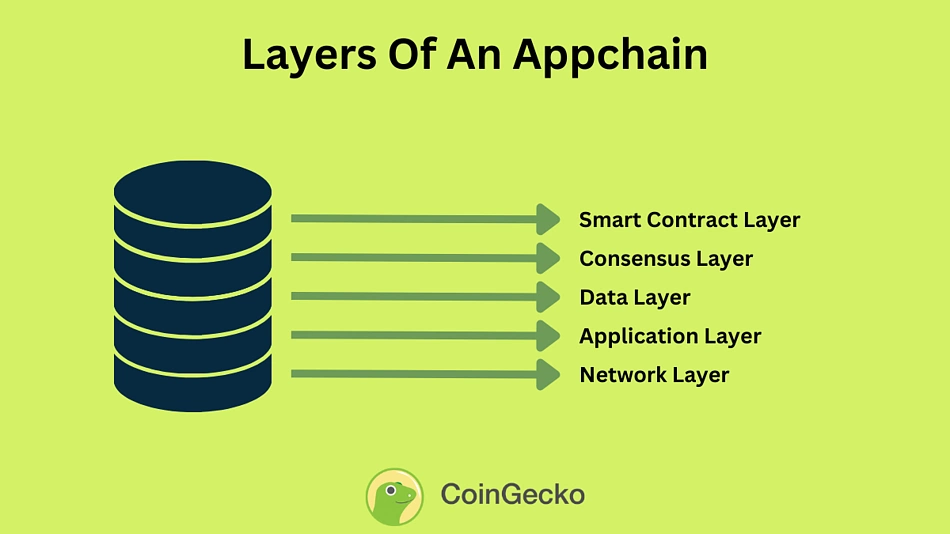
How unified liquidity pools aggregate capital
Unified liquidity pools function as a centralized settlement layer for appchain ecosystems. Instead of treating each appchain as an isolated silo with fragmented capital, these pools aggregate assets from multiple chains into a single logical reserve. This architecture mirrors the Depository Trust & Clearing Corporation (DTCC) model, where disparate securities are cleared through a central counterparty to reduce settlement risk and improve capital efficiency. By centralizing the liquidity layer, dApps gain access to deeper order books and tighter spreads without requiring users to manage cross-chain bridges manually.
The mechanism relies on standardized asset representations and cross-chain messaging protocols. When a user initiates a trade on a specific appchain, the transaction is routed to the unified pool, which settles the trade using aggregated reserves. This process ensures that liquidity is not stranded in isolated environments but is instead shared across the entire network. As noted by Thirdweb, this setup enables secure asset transfers and cross-chain swaps, allowing dApps to access multi-chain liquidity and settlement directly. The result is a unified market where capital flows freely between specialized chains.
This approach contrasts sharply with traditional multi-chain strategies that rely on fragmented liquidity pools. In those models, each chain maintains its own shallow liquidity, leading to higher slippage and inefficient capital deployment. Unified pools eliminate this fragmentation by creating a single source of truth for asset prices and availability. The infrastructure supports generalized message passing, ensuring that state changes on one chain are reflected accurately in the shared liquidity layer. This design not only enhances trading efficiency but also reduces the operational complexity for developers who no longer need to curate liquidity from multiple sources.
Institutional adoption via dtcc collateral
The transition of blockchain technology from speculative trading to core financial infrastructure is best exemplified by the Depository Trust & Clearing Corporation (DTCC). As the world’s largest financial market infrastructure, the DTCC’s recent deployment of AppChain infrastructure for tokenized real-time collateral management signals a definitive shift in institutional trust. This initiative moves beyond experimental pilots, establishing a production-ready environment for managing trillions of dollars in assets.
This platform represents an industry-first application of AppChain financial infrastructure, designed specifically to support institutional decentralized finance (DeFi). By leveraging the DTCC’s AppChain, financial institutions can now manage collateral with unprecedented speed and transparency. The system automates complex reconciliation processes, reducing the operational friction that has historically hindered the adoption of digital assets in traditional finance.

The integration of AppChain into the DTCC’s ecosystem addresses the critical need for liquidity in tokenized markets. By enabling real-time collateral management, the platform ensures that capital remains efficient and accessible. This development underscores the viability of appchains as a foundational layer for high-stakes financial operations, providing the security and scalability required by major custodians and clearinghouses.
For institutions, this means moving from theoretical blockchain benefits to concrete operational advantages. The DTCC’s AppChain offers a standardized, compliant environment for tokenized assets, reducing counterparty risk and enhancing settlement efficiency. As more financial entities recognize the utility of this infrastructure, the fragmentation of liquidity across disparate chains is likely to diminish, creating a more unified and robust global market.
cross-appchain trading mechanics
Unified pools eliminate the friction of isolated liquidity by treating multiple appchains as a single settlement layer. Instead of routing trades through fragmented bridges, the system leverages generalized message passing to execute swaps across distinct environments. This architecture allows decentralized applications to access deep, shared liquidity without exposing users to complex multi-step bridging processes.
The user experience mirrors institutional trading platforms where execution speed and price certainty are paramount. When a user initiates a swap, the unified pool aggregates available assets across the connected appchains. The protocol then settles the transaction on the most efficient chain, ensuring minimal slippage and reduced gas costs. This approach aligns with modern financial infrastructure standards, prioritizing seamless interoperability over isolated chain sovereignty.
Security remains the cornerstone of this model. By utilizing verified message passing, the system ensures that asset transfers are atomic and final. This reduces the attack surface associated with traditional cross-chain bridges, which have historically been vulnerable to exploits. The result is a trading environment that combines the liquidity depth of centralized exchanges with the decentralized, permissionless nature of appchains.
Frequently asked questions about appchain liquidity
How do unified pools address fragmentation in appchain ecosystems? Appchains operate as isolated silos, often leaving liquidity stranded within individual networks. Unified pools, such as those enabled by Thirdweb’s infrastructure, aggregate capital across these chains. This allows decentralized applications to access deep, multi-chain liquidity without forcing users to bridge assets manually. The result is a consolidated market depth that mimics the efficiency of a single-chain environment while retaining the modularity of appchains.
What security standards apply to institutional appchain deployments? Institutional adoption requires rigorous security, which is why the DTCC utilizes appchain infrastructure for its digital collateral management platform. By leveraging appchains for tokenized real-time collateral, the DTCC ensures that sensitive financial data and asset transfers occur within a controlled, permissioned environment. This approach satisfies regulatory requirements for transparency and auditability that public, unregulated chains cannot provide.
Are appchains suitable for high-frequency trading or complex settlement? Yes, because appchains are application-specific, they can be optimized for particular throughput and latency requirements. Unlike general-purpose blockchains, an appchain can be tuned to handle the specific transaction patterns of a liquidity pool or settlement engine. This specialization reduces congestion and gas costs, making appchains a viable backbone for high-frequency trading and complex, multi-step financial settlements.
No comments yet. Be the first to share your thoughts!