
Defining appchain liquidity
Appchain liquidity refers to the capital dedicated to a specific application-specific blockchain, distinct from the pooled resources found on general-purpose layer-1 networks. While traditional DeFi liquidity relies on shared pools across a single chain, appchain liquidity is siloed within a bespoke environment designed for one use case. This separation creates a unique capital efficiency challenge: the liquidity must be sufficient to support the app’s specific trading volume without the benefit of cross-application demand.
General-purpose blockchains like Ethereum aggregate liquidity from thousands of dApps, creating deep pools for major pairs. In contrast, an appchain operates independently, meaning its liquidity must be generated organically by its own user base. This isolation reduces congestion and lowers transaction costs for the target application, but it fragments the broader market. Capital that might have flowed freely across a general-purpose chain is now trapped within the appchain’s boundaries.
The core difficulty lies in bootstrapping this isolated liquidity. Without the network effects of a shared chain, appchains must incentivize liquidity providers to commit capital to a narrower market. This often requires higher yields or token emissions to compete with the depth of established general-purpose pools. Consequently, appchain liquidity is not just a measure of volume, but a indicator of how well a specific application has convinced users to keep their capital within its specialized ecosystem.
The fragmentation problem
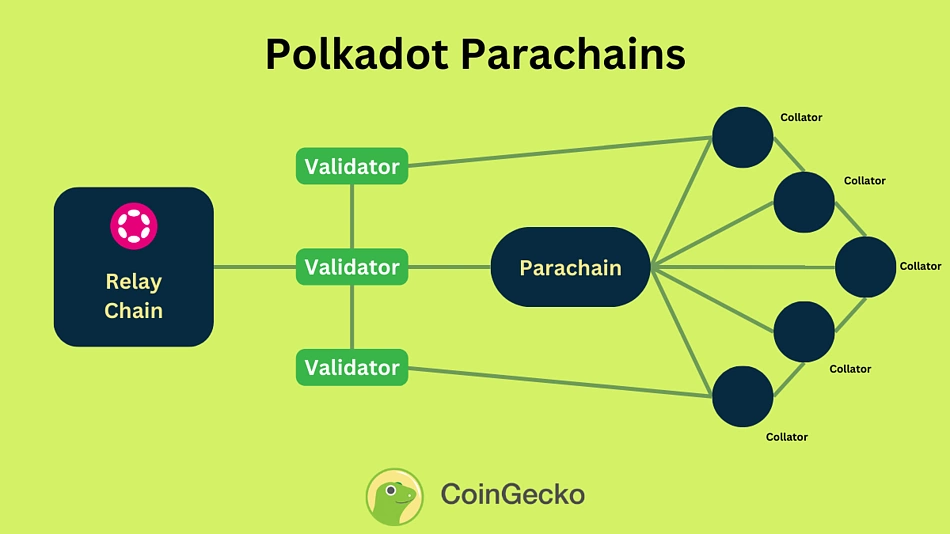
Appchains are designed to solve the congestion and inefficiency of general-purpose blockchains by dedicating resources to specific applications. This specialization allows for higher throughput and customized security models. However, this architectural choice introduces a significant downside: isolated liquidity pools. When each application chain operates as its own silo, liquidity becomes fragmented across dozens or hundreds of distinct networks.
This fragmentation creates a double-edged sword. While decentralization and specialization drive innovation, they also scatter capital. Instead of a deep, unified pool of assets, traders face shallow order books on individual chains. This dispersion directly impacts asset transfers and trading efficiency. When liquidity is thin, the cost of moving capital between chains or swapping tokens within a single appchain rises sharply.
The most immediate consequence for users is higher slippage. In a consolidated market like Ethereum or Bitcoin, large trades can be executed with minimal price impact. In an isolated appchain, even modest trade sizes can move the price significantly because there are fewer counterparties and less depth in the liquidity pool. This reduces capital efficiency; providers of liquidity must deploy more capital to achieve the same market coverage, and traders pay more to enter or exit positions.
Beyond trading costs, this fragmentation creates user friction. To access the best prices, users often have to bridge assets across multiple chains, a process that is slow, expensive, and risky. The lack of a unified liquidity layer means that the benefits of modular architecture—speed and customization—come at the expense of ease of use and market depth. Solving this fragmentation is the primary hurdle for appchains to achieve mainstream adoption.
Cross-chain aggregation methods
Fragmented liquidity is the primary bottleneck for appchain adoption. When assets are trapped in isolated silos, trading depth dries up and slippage increases. Aggregation solves this by stitching together deep pools from multiple chains into a single, unified liquidity layer. This allows users to trade against the best available prices across the entire ecosystem, regardless of where the asset originally resides.
Generalized message passing
Generalized message passing acts as the nervous system for cross-chain liquidity. Instead of relying on fragile, custom bridges for every token pair, this method allows smart contracts on different appchains to communicate state changes securely. Protocols like Thirdweb leverage this to enable secure asset transfers and cross-chain swaps, ensuring that dApps can access multi-chain liquidity without manual intervention. When a trade executes on Chain A, the message verifies the state on Chain B, unlocking the corresponding assets for settlement. This creates a seamless experience where liquidity feels centralized, even though the underlying infrastructure is distributed.
Atomic swaps and liquidity pools
Atomic swaps provide the mechanical foundation for trustless liquidity aggregation. By using hash time-locked contracts (HTLCs), two parties can exchange assets across different blockchains simultaneously. If either side of the transaction fails, the entire swap reverts, eliminating counterparty risk. This mechanism is critical for maintaining appchain liquidity integrity during high-volume trading. When combined with automated market makers (AMMs) that aggregate orders from multiple chains, atomic swaps ensure that liquidity providers are compensated fairly and that traders receive immediate execution. The result is a robust liquidity layer that scales with the number of connected appchains, rather than degrading as complexity increases.

Collateral management in appchains
Institutional-grade collateral management is moving from theoretical promise to production reality through appchain liquidity. By isolating specific workflows on dedicated chains, financial infrastructure can bypass the congestion and unpredictable costs of public networks. This separation allows for deterministic settlement and granular control over asset states, which is a prerequisite for high-value, regulated trading.
The DTCC Collateral AppChain serves as the primary example of this shift. Rather than treating blockchain as an experiment, the Depository Trust & Clearing Corporation has deployed infrastructure designed to carry proof of ownership and settlement into production at scale. This approach addresses the "fragmentation" problem by creating a unified, purpose-built layer for tokenized securities, ensuring that liquidity is not trapped in siloed general-purpose chains.
This model prioritizes efficiency over public visibility. The DTCC Appchain operates without the complexities and costs associated with public blockchain consensus mechanisms, enabling faster finality and lower transaction fees. For traditional finance, this means that digital assets can be managed with the same rigor and speed as legacy systems, but with the added transparency and composability of on-chain technology.
The transition highlights a broader trend: appchains are becoming the backbone for institutional adoption. By solving the fragmentation issue through dedicated liquidity pools and optimized collateral management, these chains offer a viable path for integrating real-world assets into digital markets without compromising on security or performance.
Capital Efficiency Strategies
Appchain liquidity often suffers from fragmentation, where isolated pools fail to support high-value trading or deep order books. Developers must implement strategies that concentrate capital and reduce idle assets to make these chains viable for institutional and retail users alike.
Incentivized Liquidity Provision
Rewarding liquidity providers (LPs) is the fastest way to bootstrap initial depth. However, generic token rewards often lead to "yield farming" where providers withdraw as soon as incentives dry up. Instead, protocols should structure incentives around lock-up periods or performance metrics, ensuring that capital remains sticky during critical growth phases. This aligns LP interests with the long-term health of the appchain rather than short-term arbitrage.
Dynamic Fee Structures
Static fees rarely adapt to changing market conditions. Implementing dynamic fee models allows protocols to adjust costs based on volatility or trading volume. For example, fees can decrease during high-volume periods to encourage trading, or increase during low-liquidity windows to protect LPs from impermanent loss. This flexibility ensures that the appchain remains attractive to traders without penalizing providers during quiet markets.
Aggregated Liquidity Pools
Rather than forcing users to choose between isolated appchain pools, developers can integrate aggregated liquidity solutions. These systems pull depth from multiple sources, creating a unified order book that mimics the liquidity of major centralized exchanges. This approach solves the cold-start problem by giving new appchains immediate access to deeper capital markets.

Appchain Liquidity FAQ
Appchain liquidity addresses the fragmentation that often isolates modular chains. By tailoring infrastructure to specific needs, these chains can solve the scalability and cost issues inherent in general-purpose networks.
No comments yet. Be the first to share your thoughts!