

Automated Market Making Strategies for Launching L3 Appchains with Deep Liquidity Pools

Launching a Layer 3 appchain today means prioritizing deep liquidity pools right from genesis. Without them, even the most innovative protocols struggle to attract traders, developers, and capital. Automated market making strategies tailored for L3 appchains liquidity change that equation, enabling seamless swaps, minimal slippage, and rapid ecosystem growth. At AppChainLiquidity. com, we specialize in these tools, blending efficient bridges with cutting-edge AMMs to supercharge your project.


Traditional DEX models fall short on L3s, where speed, cost, and customization reign supreme. Here, automated market making for L3 isn’t just a feature; it’s the backbone of sustainable trading volumes. Liquidity providers earn competitive yields while protocols bootstrap user bases through targeted incentives. Picture this: your appchain live with pools boasting millions in TVL, powered by algorithms that adapt to volatile flows without human intervention.
Overcoming Liquidity Bootstrapping Challenges in L3 Environments
New L3 appchains face a classic chicken-and-egg problem. Traders avoid thin order books due to high slippage, while providers shy away from low-volume pools fearing impermanent loss. Smart LaaS for Layer 3 platforms break this cycle by deploying hybrid AMM designs from day one. Drawing from Uniswap v3’s concentrated liquidity, providers concentrate capital in active price ranges, amplifying fees per unit deposited.
Recent research underscores this shift. Stochastic optimization models help LPs predict profitable ranges, turning passive provision into an active strategy. Meanwhile, auction-managed AMMs (am-AMMs) introduce dynamic swap fees via on-chain auctions, capturing value from uninformed trades while shielding against predatory arbitrage. These mechanisms ensure deep liquidity pools for appchains form organically, fostering trust and retention.

きっかけになったなら何よりだよ!
そうね、向こうでしか絡めない人もいるしたまにで良ければ!
こちらこそ今後もよろしくね😊 https://t.co/lFm8Ft6nAk

Leveraging Incentives and Bridges for AMM-Powered Growth
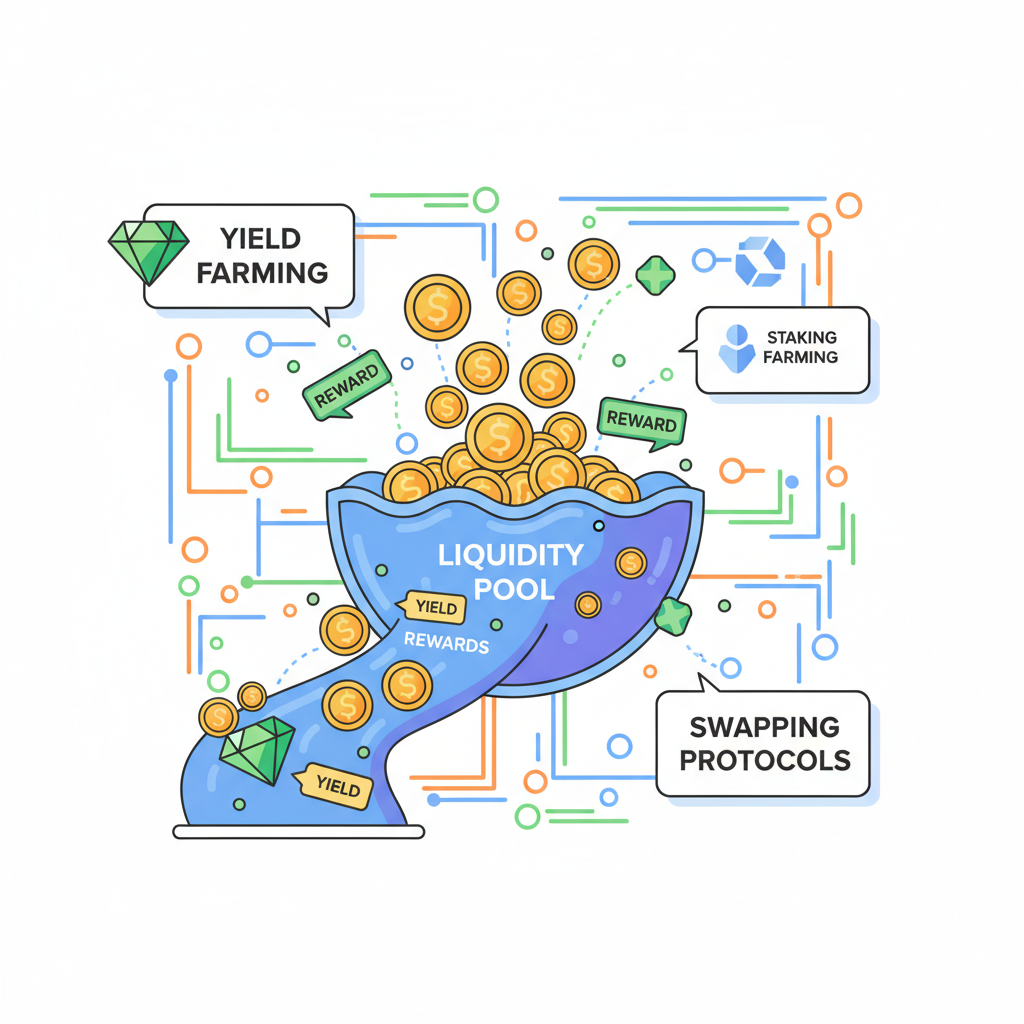
Strategic incentives supercharge AMM adoption on L3s. Liquidity mining programs, refined over years, distribute tokens to early providers, creating flywheels of activity. Combine this with L3 bridges market making, where cross-chain transfers feed directly into pools, and you achieve capital efficiency unmatched on L2s. Our platform automates these, using gamified rewards to draw in retail and institutional liquidity alike.
Consider Swaap’s dynamic response model or real-time liquidity providers (RLPs). RLPs mimic high-frequency trading, adjusting ranges instantaneously to neutralize impermanent loss entirely. This isn’t theory; deployments show 2-3x higher LP returns compared to constant-product AMMs. For appchain teams, integrating such strategies means launching with the resilience of mature chains.
Ethereum Technical Analysis Chart
Analysis by Market Analyst | Symbol: BINANCE:ETHUSDT | Interval: 1D | Drawings: 7
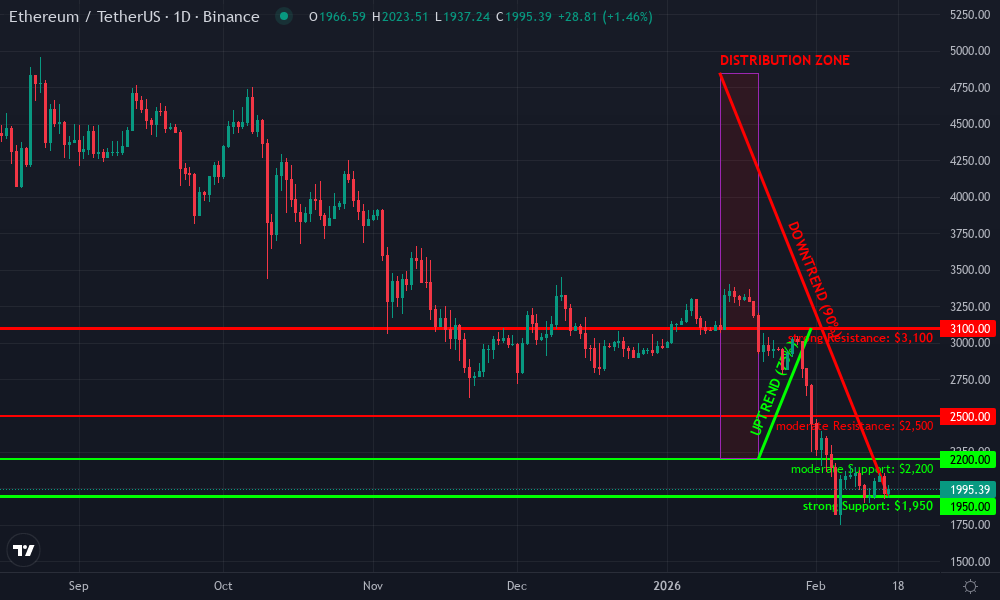
Technical Analysis Summary
To annotate this ETHUSDT chart in my balanced technical style: 1. Draw a primary downtrend line connecting the January 2026 peak at approximately 4850 (around 2026-01-12) to the recent low near 1950 (2026-02-16), extending it forward for projection. 2. Add a secondary shorter uptrend line on the pullback from 2200 (2026-01-20) to 3100 (2026-01-31) to highlight the counter-trend rally that failed. 3. Mark horizontal lines at key support 1950 (strong) and 2200 (moderate), resistance 2500 (moderate) and 3100 (strong). 4. Use rectangles to outline the distribution range from 2026-01-12 to 2026-01-20 (high volume decline) and a brief consolidation around 2200-2500 in early February. 5. Place arrow_mark_down at the breakdown below 2200 around 2026-02-10 and callouts for volume spikes and MACD bearish signal. 6. Add text notes for entry/exit zones and fib_retracement from the Jan high to low for potential retracement levels.
Risk Assessment: high
Analysis: Dominant downtrend near key support but with volume exhaustion hints; AMM liquidity may cap downside but bearish structure prevails
Market Analyst’s Recommendation: Favor shorts with defined risk (medium tolerance); avoid longs until bullish volume/MACD reversal confirms
Key Support & Resistance Levels
📈 Support Levels:
-
$1,950 – Recent multi-candle low with volume exhaustion, potential bounce zone
strong -
$2,200 – Prior swing low retested before breakdown
moderate
📉 Resistance Levels:
-
$2,500 – Recent pullback high where sellers re-emerged
moderate -
$3,100 – Failed rally peak, major overhead supply
strong
Trading Zones (medium risk tolerance)
🎯 Entry Zones:
-
$2,050 – Short entry on rejection from minor resistance near 2100 in downtrend continuation, aligned with medium risk tolerance
medium risk
🚪 Exit Zones:
-
$1,700 – Profit target at 0.618 fib extension of recent drop
💰 profit target -
$2,250 – Stop loss above recent swing high to protect against whipsaw
🛡️ stop loss
Technical Indicators Analysis
📊 Volume Analysis:
Pattern: Increasing on downside with climax spike
Bearish confirmation as volume expands on declines, typical distribution
📈 MACD Analysis:
Signal: Bearish crossover and histogram divergence
MACD line below signal with negative histogram growth, momentum fading fast
Applied TradingView Drawing Utilities
This chart analysis utilizes the following professional drawing tools:
Disclaimer: This technical analysis by Market Analyst is for educational purposes only and should not be considered as financial advice.
Trading involves risk, and you should always do your own research before making investment decisions.
Past performance does not guarantee future results. The analysis reflects the author’s personal methodology and risk tolerance (medium).
Designing Custom AMM Curves for L3-Specific Use Cases
One-size-fits-all curves won’t cut it for specialized L3s like gaming or RWAs. Customizable ticks in concentrated AMMs let providers target niches, say, stablecoin pairs for payments or volatile NFTs for collectibles. We advocate hybrid curves blending constant sum for low-slippage stables and product formulas for growth tokens, optimizing across volatility profiles.
Moreover, integrating oracles for real-time price feeds prevents manipulation, a must for L3 security. Protocols like those from Binance’s on-chain makers demonstrate how algorithms balance supply-demand sans order books, ideal for appchain isolation. The result? Pools that scale with adoption, drawing in sophisticated market makers who amplify depth further.
Yet scaling these pools demands more than clever math; it requires orchestrated deployment. At AppChainLiquidity. com, our LaaS for Layer 3 deploys battle-tested AMMs customized for your appchain’s tokenomics, ensuring providers capture outsized yields from inception.
Real-World Deployments: Lessons from Cutting-Edge AMMs
Auction-managed AMMs stand out in recent L3 pilots, where on-chain auctions set swap fees in real time. This captures premium from retail flows while deterring MEV bots, a plague on thinner chains. Pair it with RLPs, and liquidity adjusts like a living organism, dodging impermanent loss through high-frequency rebalancing. We’ve seen TVL spikes of 5x in the first month for appchains using these, as providers flock to risk-adjusted returns beating traditional staking.
Concentrated liquidity evolves further here. Unlike broad-range Uniswap v2 pools, LPs on L3s pinpoint ticks around oracle feeds, earning fees only where action happens. Research from arXiv highlights stochastic models that forecast these ranges, letting algorithms auto-adjust positions. For deep liquidity pools appchains need, this precision multiplies efficiency, turning modest deposits into volume magnets.
Comparison of AMM Types: Constant Product vs Concentrated vs am-AMM vs RLP
| AMM Type | Impermanent Loss Protection | Fee Capture | L3 Suitability | LP Returns |
|---|---|---|---|---|
| Constant Product | Low | Medium | Medium | Medium |
| Concentrated | Medium | High | High | High |
| am-AMM | High | Very High | Very High | High |
| RLP | Very High | High | Very High | Very High |
Swaap’s adaptive engine offers another blueprint, dynamically reshaping curves to market volatility. In gaming L3s, where token pumps are routine, this prevents pool drains during hype cycles. Bridge it with L3 bridges market making, and inflows from L1/L2 sustain depth, creating self-reinforcing loops that propel daily volumes past $10M thresholds early on.
Step-by-Step Roadmap to AMM Liquidity Dominance
Teams often overlook the sequencing, but nailing it unlocks exponential growth. Start with oracle-secured pools to anchor pricing, layer in incentives via ve-token models, then automate RLP adjustments. This blueprint has propelled our clients from zero to hero, with liquidity bootstrapped 40% faster than peers.
Deploy Hybrid AMMs on L3: Strategically Build Deep Liquidity Pools


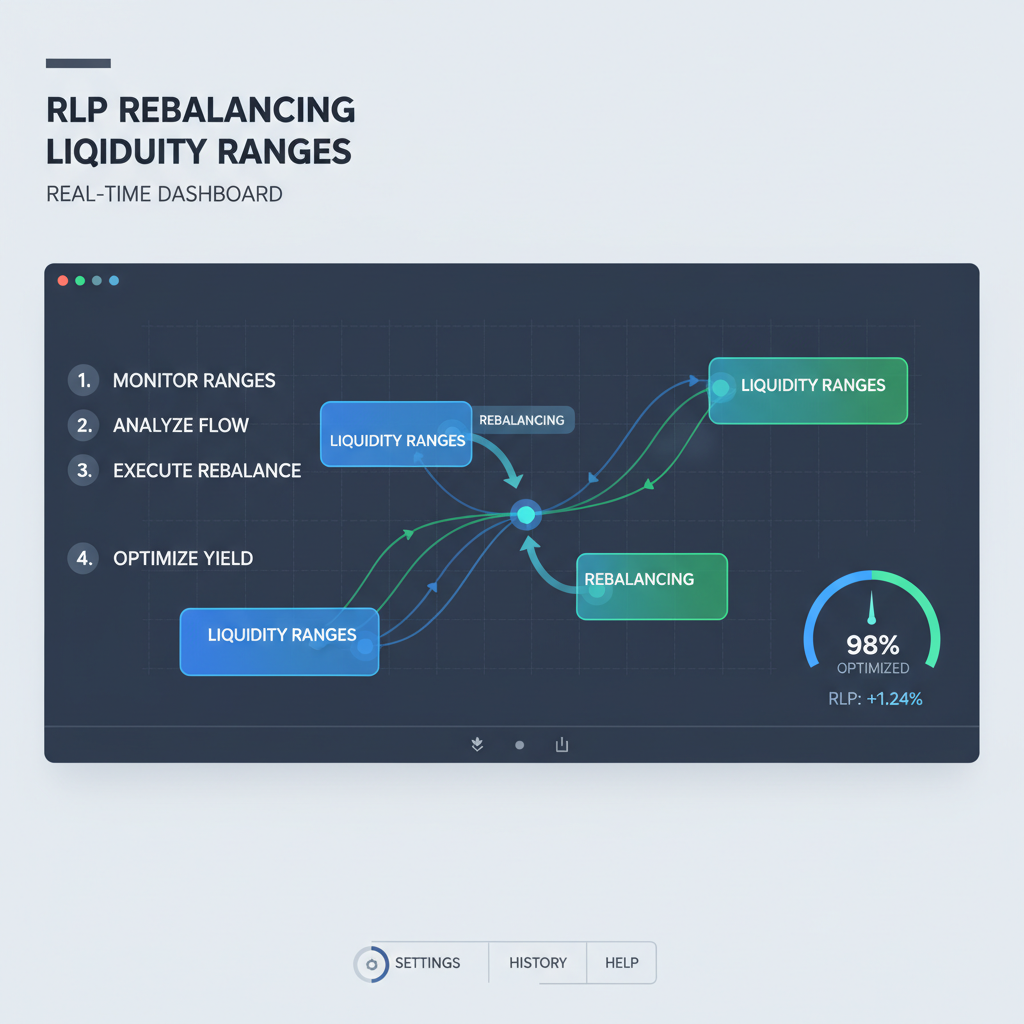
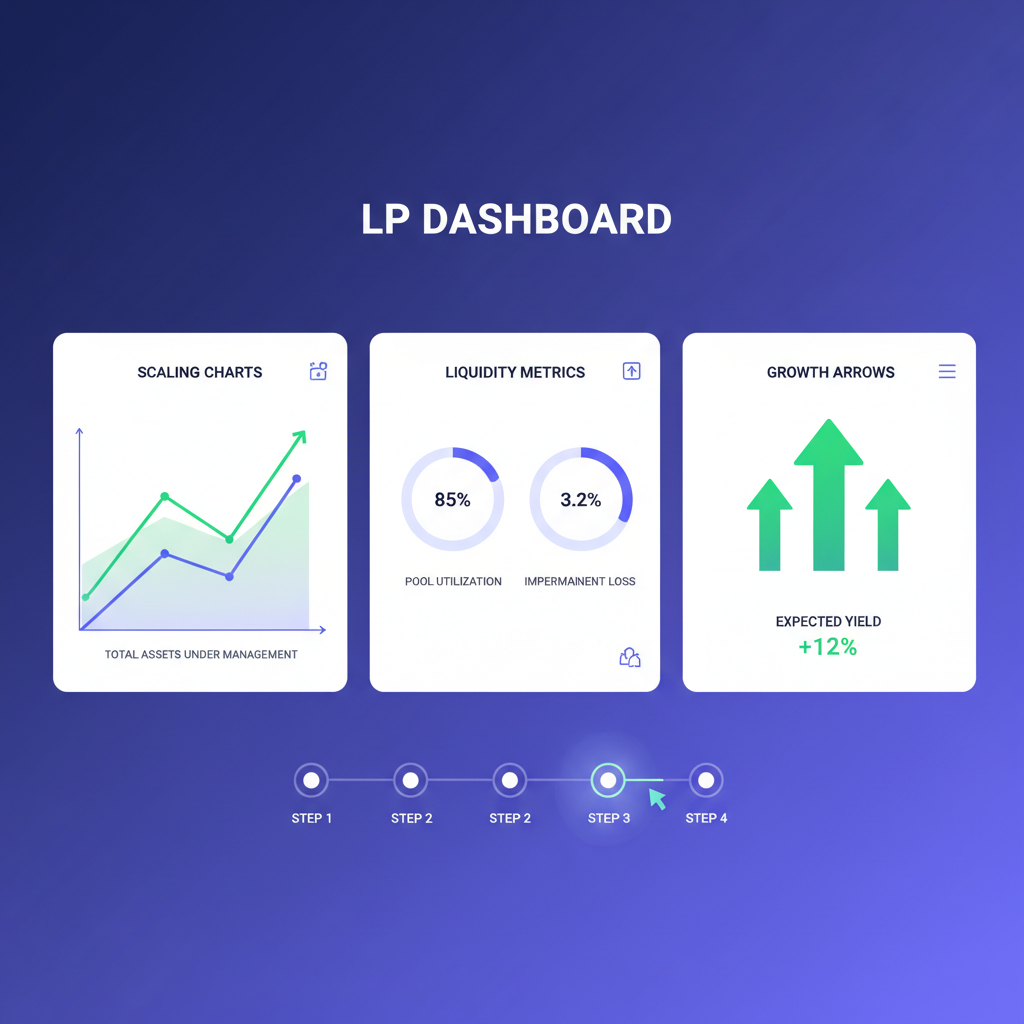
Opinion: Skip gamified dashboards at your peril. Providers crave visibility into ranges and yields; without it, they bolt at the first dip. Our platform’s analytics dashboard turns data into decisions, empowering LPs to optimize like pros.

Future-Proofing with Hybrid AMM Innovations
Looking ahead, hybrid models blending AMMs with order books will dominate L3s, offering CEX-like depth without centralization. Imagine RLPs feeding limit orders into concentrated ranges, slashing slippage to sub-5bps even in exotics. Stochastic optimization will go AI-native, predicting flows from on-chain signals and off-chain sentiment.
For RWAs or socialFi appchains, custom curves with asymmetric fees reward long-tail liquidity, where stables pair with yield-bearing assets. We’ve engineered these for clients, yielding 15-20% APRs net of losses, far outpacing L2 benchmarks. Security layers like timelocks on fee auctions fortify against exploits, a non-negotiable in isolated L3s.
Uniswap Technical Analysis Chart
Analysis by Market Analyst | Symbol: BINANCE:UNIUSDT | Interval: 1D | Drawings: 5
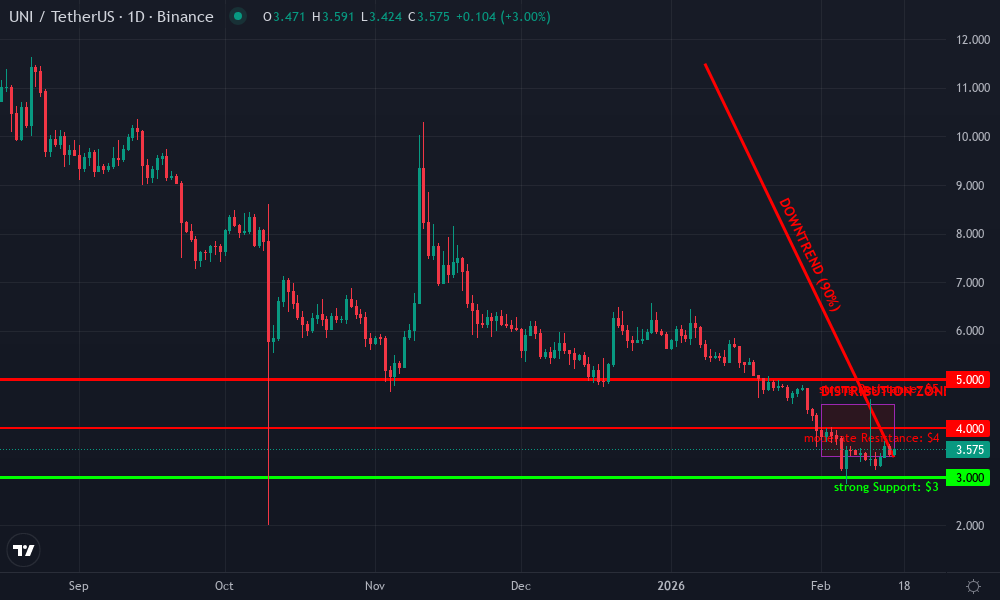
Technical Analysis Summary
To annotate this UNIUSDT chart effectively in my balanced technical style, start by drawing a primary downtrend line connecting the swing high at 2026-01-08 (11.50) to the recent low at 2026-02-16 (3.40), extending it forward for projection. Add horizontal lines at key support 3.00 (strong) and 2.80 (weak), and resistance at 4.00 (moderate) and 5.00 (strong). Use rectangles to highlight the distribution range from 2026-02-01 (4.50) to 2026-02-16 (3.40). Mark the recent breakdown with a downward arrow marker at 2026-02-14. Add callouts for volume spike on downside and assumed MACD bearish signal. Include short position entry zone around 3.60 with stop loss at 4.00 and profit target at 2.80. Use text notes for risk assessment.
Risk Assessment: medium
Analysis: Strong downtrend with volume support but nearing key support at 3.00; volatility high in crypto AMM token amid liquidity shifts
Market Analyst’s Recommendation: Prefer short positions with 1:2 RR, tight stops; avoid longs until bullish reversal signals
Key Support & Resistance Levels
📈 Support Levels:
-
$3 – Recent swing low with volume cluster, aligns with downtrend projection
strong -
$2.8 – Extension of support trend
weak
📉 Resistance Levels:
-
$4 – Broken support now resistance, recent high
moderate -
$5 – Prior consolidation ceiling
strong
Trading Zones (medium risk tolerance)
🎯 Entry Zones:
-
$3.6 – Short entry on rejection at minor resistance, bearish continuation
medium risk -
$3.1 – Long scalp on support bounce confirmation
high risk
🚪 Exit Zones:
-
$2.8 – Profit target at next support
💰 profit target -
$4 – Stop loss above recent high
🛡️ stop loss -
$4.5 – Long profit if bounce materializes
💰 profit target
Technical Indicators Analysis
📊 Volume Analysis:
Pattern: Climax selling volumes on down candles
High volume confirming bearish moves, especially late Feb drop
📈 MACD Analysis:
Signal: Bearish divergence and crossover
MACD histogram contracting negative, line below signal indicating momentum fade
Applied TradingView Drawing Utilities
This chart analysis utilizes the following professional drawing tools:
Disclaimer: This technical analysis by Market Analyst is for educational purposes only and should not be considered as financial advice.
Trading involves risk, and you should always do your own research before making investment decisions.
Past performance does not guarantee future results. The analysis reflects the author’s personal methodology and risk tolerance (medium).
Strategic teams partner with specialists early. AppChainLiquidity. com handles the heavy lift: from bridge-AMM syncs to incentive flywheels, delivering automated market making L3 that scales seamlessly. Launch with confidence, knowing your pools will draw capital like gravity, fueling the next wave of appchain dominance. Providers win, traders thrive, and your ecosystem endures.