

As Ethereum holds steady at $2,082.23, up $31.45 in the last 24 hours, the DeFi sector grapples with a fundamental tension: delivering the precision of centralized order books while slashing the exorbitant gas costs that plague on-chain trading. Traditional automated market makers (AMMs) have dominated with their liquidity pools, but they introduce impermanent loss and slippage that frustrate serious traders. Enter L3 appchain liquidity solutions, which promise gas-efficient on-chain order books tailored for high-performance DeFi. These dedicated chains, built atop L2s, optimize for custom applications like perpetuals and spot markets, minimizing fees and maximizing throughput.
On L1 Ethereum, updating an order book means burning gas for every bid or ask adjustment, rendering high-frequency strategies uneconomical. L2 rollups bundle transactions for better efficiency, yet persistent congestion and calldata costs still hinder true scalability. Liquidity providers, ever pragmatic, chase yield but balk at capital drag from volatile pools. Order books, by contrast, enable limit orders that capture spreads without constant rebalancing, yet blockchain constraints have kept them off-chain until now.
Overcoming Gas Barriers with L3 Appchains
L3 appchains address these pain points head-on by layering specialized execution environments over L2s. Picture a purpose-built chain for your DEX: block times under a second, gas fees in fractions of a cent, and order matching that rivals CEX speeds. This isn't hype; it's engineering. By offloading order book logic to app-specific chains, developers sidestep L1's calldata bloat and L2's shared bottlenecks. Liquidity as a service for L3 platforms like AppChainLiquidity. com streamline this, providing bridges, market making, and incentives from launch day.
Consider the economics: in an AMM, pricing follows a formula, exposing LPs to arbitrage and loss. Order books flip this, letting providers set precise limits and withdraw anytime. But on-chain, each update costs dearly. L3s bundle and optimize, making on-chain order books appchains viable. Research underscores this shift; AMMs excel in automation but falter on slippage, while order books demand low-cost updates to thrive.
Ethereum (ETH) Price Prediction 2027-2032
Factoring L3 Appchain Liquidity Solutions for Gas-Efficient On-Chain Order Books from Current $2,082 Level
| Year | Minimum Price | Average Price | Maximum Price | YoY % Change (Avg) |
|---|---|---|---|---|
| 2027 | $1,800 | $3,200 | $5,000 | +54% |
| 2028 | $2,500 | $4,500 | $7,000 | +41% |
| 2029 | $3,500 | $6,000 | $9,500 | +33% |
| 2030 | $4,500 | $8,000 | $13,000 | +33% |
| 2031 | $5,500 | $10,500 | $17,000 | +31% |
| 2032 | $6,500 | $13,500 | $22,000 | +29% |
Price Prediction Summary
Ethereum (ETH) is forecasted to experience robust growth from 2027 to 2032, propelled by L3 appchain innovations like ZKX, Orderly Network, HyperCore, and Uniswap V3 on Saga, which enable gas-efficient on-chain order books. These advancements reduce fees, boost DeFi scalability, and attract institutional liquidity. Average prices are projected to climb from $3,200 in 2027 to $13,500 by 2022, a cumulative +549% gain, with min/max reflecting bearish corrections and bullish surges amid market cycles.
Key Factors Affecting Ethereum Price
- Adoption of L3 appchains (ZKX, Orderly, HyperCore, Saga Uniswap) for low-gas on-chain order books
- Reduced transaction costs and enhanced speeds driving DeFi TVL growth
- Ethereum's scalability leadership via L2/L3 ecosystem
- Bullish market cycles, institutional inflows, and ETH ETF momentum
- Regulatory developments favoring compliant DeFi infrastructure
- Mitigated competition through interoperability and liquidity optimization
Disclaimer: Cryptocurrency price predictions are speculative and based on current market analysis. Actual prices may vary significantly due to market volatility, regulatory changes, and other factors. Always do your own research before making investment decisions.
Key Developments Driving L3 Liquidity Innovation
Projects are already proving the model. ZKX Appchain stands out as an omni-chain layer, linking L1s and L2s via its Substrate framework. Here, order books process trades with on-chain P and L verification, ensuring transparency without L1 dependency. This setup fosters continuous liquidity, vital for cross-chain perps.
Orderly Network pushes further with its omnichain perpetual futures orderbook. Developers deploy institutional-grade books that settle across chains, unifying fragmented liquidity. No more siloed pools; traders interact seamlessly, with settlement handled efficiently on the appchain.
HyperCore's on-chain central limit order book (CLOB) exemplifies gasless precision. Deterministic price-time matching runs parallel per-market books, dodging congestion. Fee recycling bolsters liquidity, creating a self-sustaining ecosystem. Meanwhile, Uniswap V3 on Saga's Chainlet automates bridging via a liquidity integration layer, tackling multichain fragmentation head-on.

Advantages Tailored for Market Makers and Traders
For market makers, L3 appchains market making means deploying strategies without gas roulette. Dynamic LP adjustments track ranges profitably, minimizing impermanent loss. Traders benefit from low slippage in deep books, with gas efficient L3 trading enabling retail access to pro tools. Custom consensus and fees let teams fine-tune for payments or DeFi, scaling to millions of txps.
At AppChainLiquidity. com, we optimize these pools for depth and stability, drawing on proven low-risk tactics. Diversification across L3s hedges volatility, patience rewards the prepared. As ETH trades at $2,082.23, these solutions position projects for adoption in a multi-chain world.
Builders seeking L3 appchain liquidity turn to specialized providers for turnkey solutions. At AppChainLiquidity. com, we deploy appchain liquidity pools alongside order books, blending the best of both worlds. Our market making algorithms adjust positions dynamically, keeping spreads tight even in volatile conditions like Ethereum's recent nudge to $2,082.23 after dipping to $2,041.26.
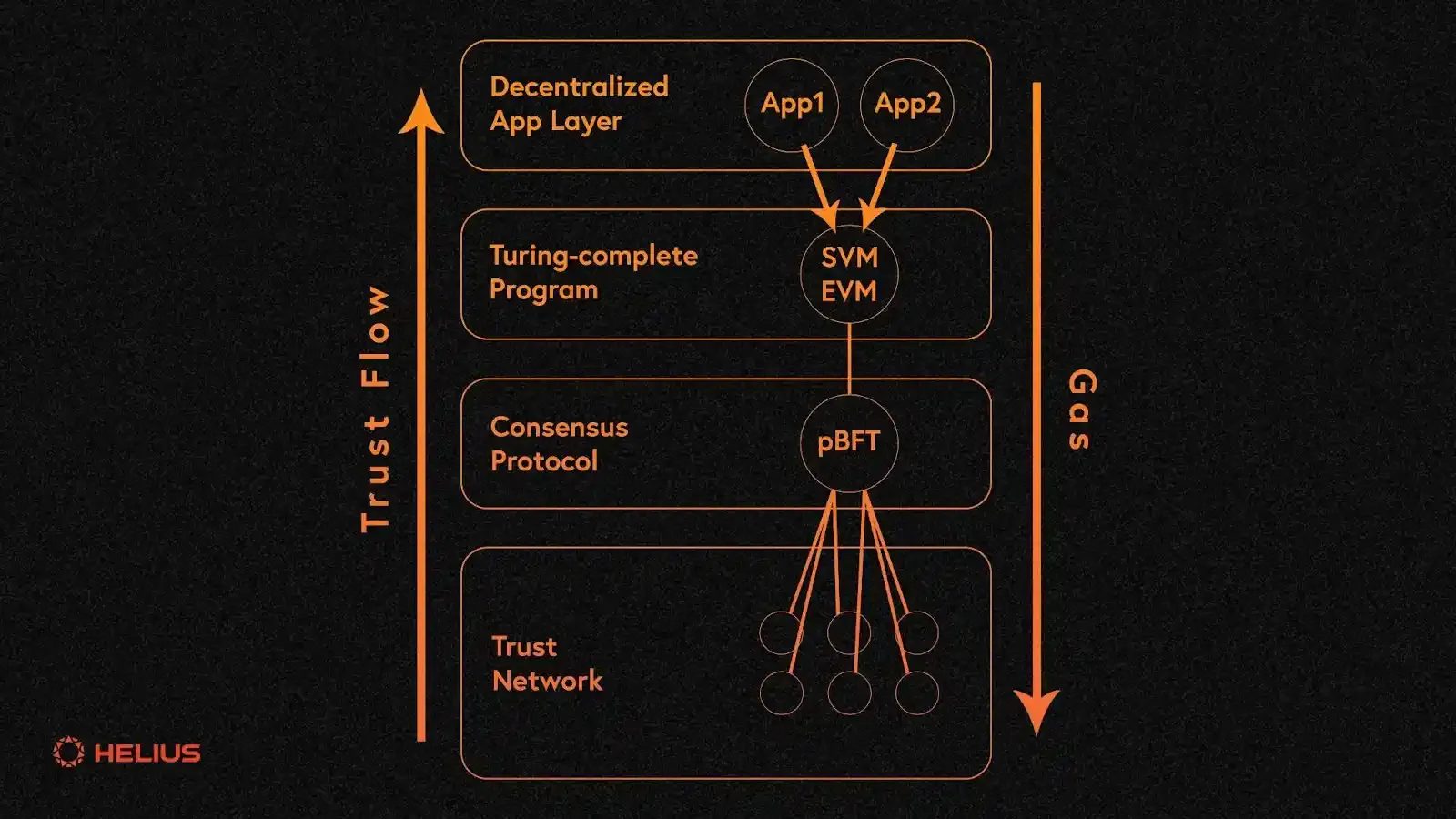
Navigating Tradeoffs: AMMs Meet Order Books on L3
Automated market makers shine for simplicity, automating pricing without manual updates. Yet their constant exposure formula breeds impermanent loss, especially when assets swing. Order books counter this by letting liquidity providers post limits, capturing spreads selectively. On L3 appchains, hybrid models emerge: concentrated liquidity in ranges akin to Uniswap V3, but with CLOB precision for tight execution. This fusion mitigates slippage for traders while shielding providers from full-range risks.
Market makers thrive here. Traditional off-chain firms now port strategies on-chain, using L3 appchains market making to minimize capital drag. They post bids and asks, hedging via perps, all at sub-cent gas. No more waiting for L2 batches; appchains deliver near-instant finality. Pragmatic providers follow yield signals, pulling capital from underperformers swiftly.
Comparison of AMM vs. Order Book on L3 Appchains
| Liquidity Model | Gas per trade (Gwei) | Slippage at $1M volume (bps) | LP Yield (APR) | Update Frequency (tx/day) | Impermanent Loss Risk |
|---|---|---|---|---|---|
| AMM | 10-50 | 50-200 | 10-20% | ~500,000 | High |
| Order Book | 0.1-2 | 1-10 | 15-30% | ~5,000,000+ | Low |
Dynamic tools track conditions, rebalancing LPs into profitable zones. This proactive stance beats passive AMM holding, particularly amid multichain fragmentation. L3s optimize bundling, slashing costs versus L1 or even L2 calldata.
Cross-Chain Bridges and Incentive Mechanisms
L3 cross-chain bridges form the backbone, ferrying assets seamlessly. ZKX and Orderly exemplify omnichain settlement, pooling liquidity across ecosystems. Incentives align participants: protocols rebate fees to makers, bootstrap via airdrops, or lock yields in vaults. AppChainLiquidity. com engineers these precisely, forecasting TVL ramps based on historical launches.
Take Hyperliquid's model: price-time priority matching mirrors CEXs, with gasless actions under consensus. Parallel books per pair scale infinitely, fees recycled for buybacks. Saga's Uniswap deployment adds concentrated positions, automating routes to dodge fragmentation. These aren't experiments; they're production-grade, handling real volume at Ethereum's current $2,082.23 stability.
Challenges persist, of course. Security demands rigorous audits, interoperability risks sequencer failures. Yet L3 customizability shines: tweak fees for high-frequency, embed oracles natively. Developers launch via managed services like Zeeve, purpose-built for DeFi speed.
For portfolio managers like myself, with 18 years honing low-risk plays, L3s restore discipline. Diversify across appchains, patient in building depth. Order books enable precise exposure, far superior to AMM roulette. As congestion eases and adoption swells, gas efficient L3 trading unlocks institutional capital. Projects ignoring this risk obsolescence in a fragmented landscape. Platforms providing liquidity as a service L3 bridge the gap, powering ecosystems with reliable, scalable order flow.



No comments yet. Be the first to share your thoughts!