
The Liquidity Constraint of Appchains
Appchains solve the congestion and cost problems of general-purpose blockchains by offering dedicated throughput and predictable fees for a single application. However, this specialization creates a liquidity constraint. Unlike Ethereum or Solana, where capital aggregates into deep pools, an appchain often starts with a thin order book and isolated user bases. If the application fails to drive significant volume, the chain remains undercapitalized, making it difficult to list high-value tokens or offer competitive trading pairs.
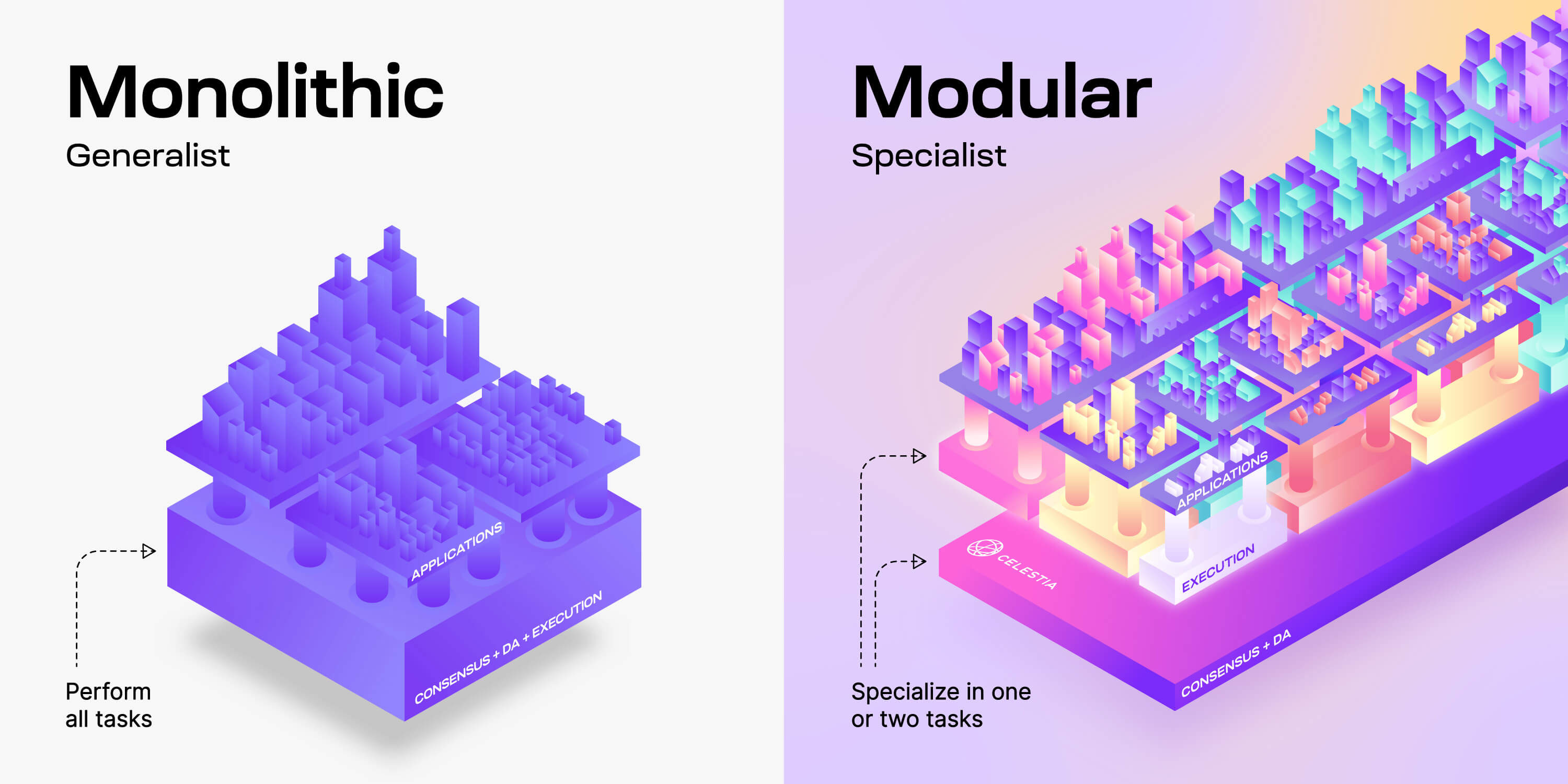
This fragmentation forces a trade-off between sovereignty and depth. Teams building appchains must decide whether to launch on their own chain with full control but limited liquidity, or to operate as a module on a shared infrastructure. The latter approach allows dApps to access multi-chain liquidity and settlement without building a security model from scratch. For instance, DTCC’s Collateral AppChain leverages shared infrastructure to enable near real-time collateral management across financial markets, avoiding the need to bootstrap a standalone ecosystem.
The challenge for 2026 is bridging this gap. Liquidity is not just about capital; it is about mobility. Without seamless cross-chain swaps and generalized message passing, assets trapped on an appchain lose value. Projects that prioritize interoperability from day one can mitigate the isolation risk, ensuring that their specialized chain remains a vibrant node in the broader DeFi network rather than a walled garden with shallow waters.
Appchain liquidity choices that change the plan
Modular appchains promise high throughput and customizable stacks, but they introduce distinct liquidity fragmentation risks compared to shared-layer execution. When evaluating an appchain for DeFi volume, you must weigh the efficiency of dedicated infrastructure against the cost of isolated capital pools.
The primary tradeoff lies in liquidity depth versus settlement speed. General-purpose chains like Ethereum or Solana offer deep, shared liquidity but suffer from congestion and high fees during peak demand. Appchains solve this by offering predictable transaction costs and dedicated throughput. However, this comes at the price of fragmented liquidity. Capital is siloed within the appchain, requiring complex bridging or cross-chain swaps to access external markets. This fragmentation can lead to wider spreads and higher slippage for large trades, a critical factor for institutional participants managing significant collateral.
Another key consideration is security model dependency. Shared-layer chains inherit the security of the mainnet’s validator set. Appchains often rely on their own validator sets or lightweight light-client verification from a parent chain. While this reduces costs, it can lower the economic security bond protecting the chain’s state. For high-stakes DeFi operations, a weaker security model increases the risk of reorgs or consensus failures, which can halt liquidity access entirely.
Finally, consider the operational complexity of cross-chain communication. Appchains enable generalized message passing and cross-chain swaps, but these mechanisms introduce latency and potential points of failure. Smart contract audits must cover the interchain messaging layer, not just the appchain itself. The overhead of securing and monitoring these bridges can offset the benefits of modular design if not managed rigorously.
| Factor | Shared Layer (e.g., Ethereum) | Appchain (Modular) |
|---|---|---|
| Liquidity Depth | High; deep pools across many dApps | Lower; siloed to specific use case |
| Transaction Costs | Variable; high during congestion | Predictable; often lower base fees |
| Throughput | Limited by global block space | Dedicated; customizable block size/time |
| Security Model | Inherited from mainnet validators | Dependent on own/light-client validators |
| Capital Efficiency | High; capital shared across ecosystem | Lower; requires bridging for external access |
How to evaluate appchain liquidity providers
Appchains are application-specific blockchains designed to serve a single decentralized application. They provide dedicated throughput, customizable tech stacks, and predictable transaction fees compared to general-purpose blockchains. However, the primary tradeoff is liquidity fragmentation. To navigate this, use the following decision framework to determine if an appchain model fits your capital requirements.
Collateral mobility refers to the ability to move assets across chains without losing utility or incurring excessive friction. If your strategy relies on high-frequency rebalancing or cross-chain arbitrage, ensure the appchain supports near real-time settlement. DTCC’s Collateral AppChain, for instance, leverages the Chainlink Runtime Environment (CRE) to enable this speed. For standard DeFi yield farming, native chain liquidity may suffice.
Security and liquidity are only valuable if assets can move. Look for appchains that enable secure asset transfers, cross-chain swaps, and generalized message passing. This infrastructure allows dApps to access multi-chain liquidity and settlement, effectively turning isolated pools into a unified liquidity layer. Without these bridges, your capital remains trapped in a siloed environment.
In 2026, institutional adoption is driving the shift toward modular chains. Verify if the appchain is built on official or primary infrastructure that supports transparency and automation. Platforms like DTCC’s Collateral AppChain are designed specifically for global markets, offering the compliance and audit trails that traditional finance requires. This distinction separates experimental chains from those built to handle real-world financial volume.
Choosing the right liquidity provider requires balancing speed, mobility, and infrastructure reliability. By focusing on these three areas, you can avoid the common pitfall of fragmented liquidity and build a more resilient DeFi strategy.
Spotting Weak Options in Appchain Liquidity
The modular appchain narrative is crowded with vague promises. In 2026, distinguishing genuine liquidity infrastructure from marketing fluff requires checking specific technical and operational claims. Below are the common pitfalls to avoid when evaluating appchain solutions.
Misleading "Universal" Claims
Many projects claim their appchain provides universal liquidity across all chains. This is rarely true. Appchains are application-specific by design, offering dedicated throughput and customizable stacks for a single use case, not a catch-all solution. If a vendor claims seamless integration with every major protocol without detailing the middleware, treat it with skepticism. Look for concrete examples of cross-chain swaps or NFT movements enabled by generalized message passing, such as those facilitated by thirdweb’s AppChain infrastructure.
Ignoring Collateral Mobility
A major weakness in many appchain proposals is the lack of true collateral mobility. While tokenization is common, moving collateral efficiently across financial markets remains a bottleneck. DTCC’s Collateral AppChain addresses this by leveraging the Chainlink Runtime Environment (CRE) and data standards for near real-time management. If an appchain solution doesn’t explicitly address how it handles institutional-grade collateral movement, it’s likely missing a critical piece of the DeFi liquidity puzzle.
Overlooking Settlement Finality
Some appchains prioritize speed over security, leading to slow or uncertain settlement finality. This is a critical flaw for DeFi volume. Ensure the appchain you’re evaluating has a clear consensus mechanism that guarantees finality without excessive delays. Modular chains that separate execution from settlement often struggle with this balance unless they have robust interoperability layers. Check if the chain uses a shared security model or has its own validator set that can handle high throughput without compromising security.
Lack of Transparency in Tokenomics
Appchains with opaque tokenomics are a red flag. Liquidity providers need to understand how rewards are distributed and how inflation impacts their holdings. Avoid appchains that don’t publish clear, auditable token emission schedules. Look for solutions that tie token value directly to network usage or collateral utility, ensuring long-term sustainability rather than short-term incentives.
Fragmented Ecosystems
Finally, beware of appchains that operate in silos. Liquidity is king, and fragmented ecosystems kill volume. The best appchains in 2026 are those that integrate with broader DeFi protocols, allowing assets to flow freely. If an appchain requires you to bridge assets through multiple, unverified hops, it’s adding unnecessary friction and risk. Prioritize chains that offer native interoperability or well-audited bridges to major liquidity hubs.
No comments yet. Be the first to share your thoughts!