
Layer 3 ecosystems hold immense potential for tailored blockchain applications, yet their launch often stumbles on liquidity silos that stifle trading volume and user engagement. Cross-chain bridges stand as cautious architects in this space, channeling assets from established Layer 1 and Layer 2 networks into fresh L3 appchains with precision and minimal exposure. At AppChainLiquidity. com, we prioritize L3 cross-chain bridges that balance speed, cost, and security to foster sustainable growth rather than fleeting hype.
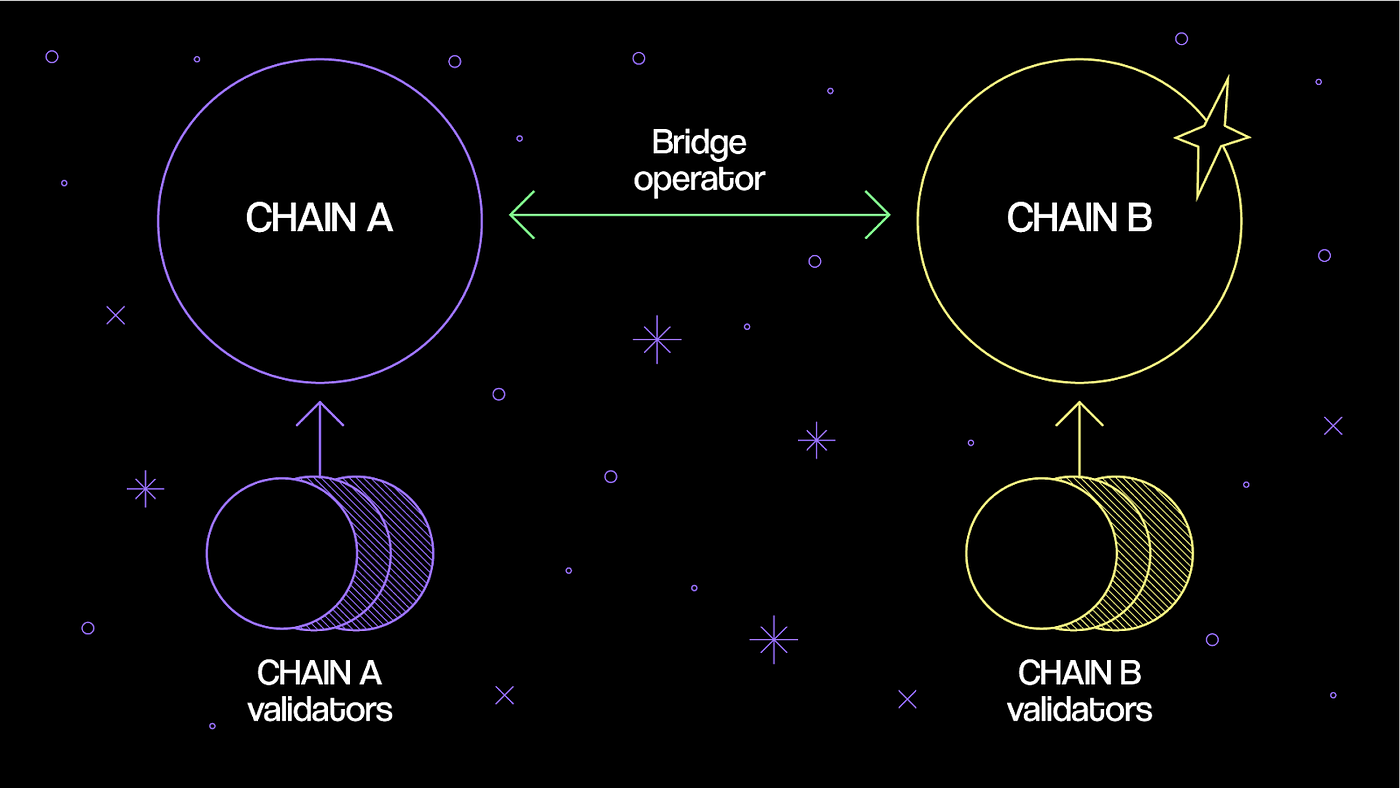
Liquidity fragmentation plagues new L3s, where appchains operate in splendid isolation, forcing developers to bootstrap pools from scratch. This not only inflates slippage during early trades but also deters capital providers wary of thin markets. Strategic deployment of L3 liquidity bridges mitigates these hurdles by pooling resources across chains, ensuring new ecosystems boot up with depth comparable to mature networks.
Navigating Fragmentation with Proven Bridge Protocols
Consider the mechanics: traditional bridges lock assets on the source chain and mint equivalents on the destination, drawing from pre-funded liquidity pools. This model, while effective, demands vigilant management to avert imbalances. In L3 contexts, where transaction volumes start modest, cross-chain liquidity for L3 appchains hinges on protocols that incentivize relayers and maintain pool parity through automated market makers.
Fragmented liquidity across appchains, L2s, and L3s makes building seamless experiences a bridging nightmare, yet intents-based solutions like Across Protocol are flipping the script with speed and low costs.
Our conservative stance favors bridges audited multiple times, with decentralized validation to sidestep single points of failure. Protocols excelling here transform L3 launches from liquidity deserts into vibrant trading hubs.
Stargate Finance: Unified Pools for L3 Expansion
Stargate Finance exemplifies strategic liquidity orchestration, leveraging LayerZero for native asset transfers across 40-plus chains, including Ethereum, Arbitrum, Optimism, and Base. No wrapped tokens clutter wallets; instead, unified pools deliver low-slippage swaps at a flat 0.06% fee. For L3 builders, this means instant finality and deep liquidity from day one, crucial for DeFi apps demanding tight spreads.
Security audits by Quantstamp and Zokyo underpin its reliability, a non-negotiable in our advisory playbook. By aggregating liquidity rather than siloing it, Stargate positions L3s to capture flows from high-TVL chains without the bootstrapping pains.
Comparison of Top Cross-Chain Bridges for L3 Ecosystems
| Bridge | Key Features | Supported Networks | Fees | Notable Metrics | Security Model |
|---|---|---|---|---|---|
| Stargate Finance | Native asset transfers without wrapped tokens, unified liquidity pools, low slippage, instant finality | 40+ chains (Ethereum, BNB Chain, Polygon, Avalanche, Arbitrum, Optimism, Base, etc.) | 0.06% flat fee | Deep liquidity pools | LayerZero protocol, audited by Quantstamp & Zokyo |
| Hyperbridge | ZK proofs & cryptographic proofs, eliminates reliance on traditional validators | Ethereum, Base, Gnosis, Optimism, Arbitrum, Polygon, BNB Smart Chain | N/A | $92M volume, 10M+ finality proofs | Zero-knowledge proofs, decentralized validation |
| Flow Bridge | Stablecoin transfers (USDC, USDT, USDF) to Flow, canonical assets | Flow, Ethereum, BNB Chain, Base | N/A | Minimal trust assumptions | Superbridge-powered, native bridge contracts |
Hyperbridge and Beyond: ZK-Powered Interoperability
Hyperbridge, launched on Polkadot by Polytope Labs, ditches validator reliance for zero-knowledge proofs, securing transfers between Ethereum, Base, Optimism, and more. Handling over $92 million in volume by 2025, it processes 10 million finality proofs with cryptographic rigor. This approach suits L3s embedded in multi-chain strategies, where data and assets must flow verifiably.
Flow Bridge complements by streamlining stablecoin ingress to Flow blockchain via Superbridge contracts, delivering canonical assets with low trust. Meanwhile, LiquidChain L3 unifies Bitcoin, Ethereum, and Solana liquidity in a verifiable SVM layer, routing assets atomically. Each protocol addresses bridge risks in L3 differently: Stargate via pooled depth, Hyperbridge through proofs, Flow with native integrations.
Strategically, teams should assess route coverage and historical uptime before committing. Partial reliance on any single bridge invites vulnerabilities; diversification across two or three, paired with our incentive designs at AppChainLiquidity. com, builds resilient liquidity foundations. These tools not only bridge gaps but engineer pathways for enduring L3 dominance.
Yet dominance demands more than connectivity; it requires safeguards against the inherent perils of cross-chain operations. Bridge exploits have drained billions historically, underscoring why our advisory at AppChainLiquidity. com insists on protocols with battle-tested security postures. For L3 appchains, where liquidity is nascent, even minor disruptions cascade into outsized losses.
Mitigating Bridge Risks in L3 Deployments
Bridge risks in L3 manifest through smart contract vulnerabilities, oracle manipulations, and liquidity imbalances that amplify slippage during volatile inflows. Stargate counters this with its unified pools and LayerZero's oracle-less messaging, while Hyperbridge's ZK proofs offer mathematical certainty over probabilistic consensus. Flow Bridge minimizes exposure by focusing on stablecoins, assets less prone to pumps and dumps that strain bridges.
Over-reliance on any bridge spells trouble; diversify to shield your L3 from the next headline-grabbing hack.
LiquidChain L3 pushes boundaries further, fusing BTC, ETH, and SOL liquidity into a single verifiable layer atop SVM. This atomic routing sidesteps sequential failures common in multi-hop bridges, delivering continuous liquidity streams. Still, no solution is foolproof; rigorous simulations of stress scenarios precede our endorsements.
Teams integrating these bridges into L3 ecosystems must layer defenses: multi-signature wallets for pool funding, dynamic fee adjustments for relayer incentives, and continuous monitoring via oracles. Pair this with automated market makers tuned for L3 gas economics, and you cultivate volume sustainability from launch.
Risk-Adjusted Comparison of L3 Bridges Optimized for Incentives
| Protocol | Security Model | Max Volume Handled | Ideal L3 Use Case | Incentive Compatibility | TVL | Recommended Allocation |
|---|---|---|---|---|---|---|
| Stargate 🌌 | LayerZero messaging stack, Audited by Quantstamp & Zokyo 🔒 | High (Deep unified pools across 40+ chains) | Ethereum L3s (Arbitrum, Optimism, Base) 🚀 | Unified LP pools, 0.06% fee, low slippage (LP rewards) ✅ | High 📈 | 40% 💰 |
| Hyperbridge ⚡ | ZK proofs & decentralized validation 🔒 | $92M (10M+ finality proofs) | EVM L3s (Ethereum, Base, Optimism, Arbitrum) 🌐 | Efficient transfers, cost-optimized (vesting/LP support) ✅ | Growing 📈 | 30% 💰 |
| Flow Bridge 💧 | Superbridge native contracts, minimal trust 🔒 | Stablecoin volumes (USDC/USDT/USDF) | Flow L3 ecosystems & Superchain rollups 🎯 | Canonical assets, LP rewards for stables ✅ | Moderate 📊 | 15% |
| LiquidChain 🌊 | SVM execution, cross-domain proofs 🔒 | Atomic liquidity (Bitcoin/Eth/Solana) | Multi-VM L3 integration (unified liquidity) 🔗 | Transparent verification, atomic routing (LP incentives) ✅ | Emerging 📈 | 15% |
Real-world deployments validate this caution. An unnamed L3 gaming chain, advised by our team, deployed Stargate alongside Hyperbridge, achieving 5x liquidity depth within weeks versus peers mired in fragmentation. Such outcomes stem from conservative modeling: projecting inflows against historical bridge downtimes, stress-testing pool rebalances, and embedding kill-switches for anomalies.
Looking ahead, intents-based bridges like Across Protocol signal evolution, executing user intents across chains without locked collateral, slashing costs further. Yet haste invites peril; prioritize protocols with on-chain governance and insurance backstops. Our platform simulates these integrations, forecasting TVL trajectories to guide capital deployment.
For L3 builders eyeing dominance, view bridges not as mere conduits but as fortified gateways. Selective integration, rigorous vetting, and incentive synergy via AppChainLiquidity. com forge empires from liquidity streams. Steady flows today yield unassailable moats tomorrow.




No comments yet. Be the first to share your thoughts!